
(Continue from the previous post) I asked him whether he risked his life going to another state to prevent a war as described by ancient texts. GongSun Di (公孙翟/Mozi) commented that he was in a temple in Lu at the time and heard that the duke of Chu was going to attack the state of Lu. He walked in a hurry to the state of Chu to visit the duke of Chu. He then simulated the defensive fight against the most famous device designer and won. As a result, he succeeded in dissuading the duke of Chu and preventing a war.
On my questions about the nature of Tian-Daoism school(Mohism) at the time, GongSun Di (公孙翟/Mozi) commented that Tian-Daoism(Mohism) was not a school but a formal religion. He taught Tian-Daoism to followers and the public in the temple. There were Tian-Daoism temples in most states and he was the chief priest of a temple in the state of Lu.(This contrasts to what we understand from history that there was no formal religion and no temples during the Zhou dynasty(c. 1100 BC – 220 BC).) The temples were decentralized similar to the situation in China today. The Chinese temple architecture structure we have today was from pre-history Daoism. (before c. 3000 BC)
Also, the Chinese palaces were meant to be temples and the ruler – “Tianzi”, son of the God Tian, was the chief priest of the state in pre-history time. That’s why the ancient Chinese palaces were built in the same way as the Chinese temples. (Even the local government offices or wealthy people’s homes were built in the same temple style. ) The complete wooden structures were from the concept of pre-history times that people didn’t want to use any materials that didn’t belong to Earth mother.
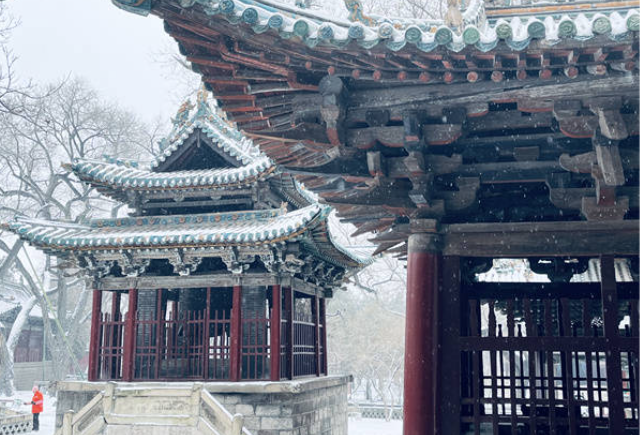
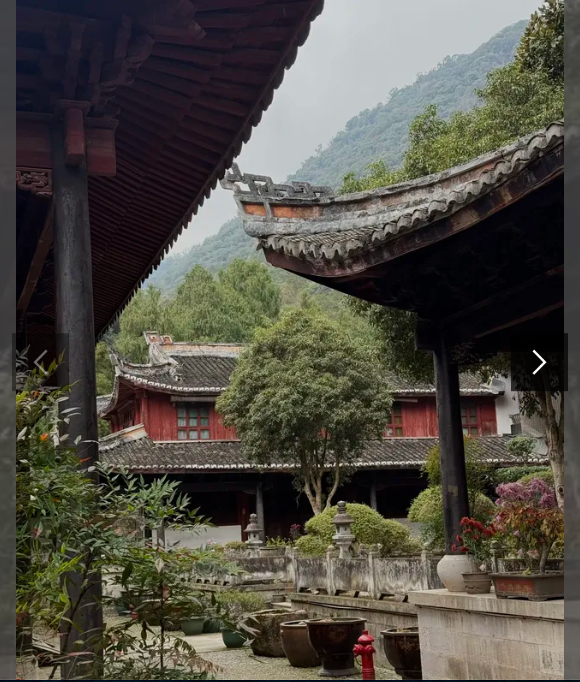
The Chinese temple has big round wooden columns with the interlocking bracket sets(Dougong) symbolizing a torch. (the Greek temples also have similar structure with round columns) The big and small round incense burners in front of the temple in the courtyard or inside the main temple room were the fire burning places, similar to the temple of Vesta. (Some big temples built independent structures like the Temple of Heaven.)
GOD Michael commented that Tian-Daoism was a part of Daoism in history. If the current Daoism that didn’t teach Tian-Daoism any more can consider adding them back.
GOD Michael further commented that Chinese Buddhism didn’t adopt the typical Buddhist temple architecture, instead it adopted Daoism temple architecture in China in history. During many later dynasties, Daoism and Chinese Buddhism were of a mix due to persecutions under different emperors. Thus, Chinese Buddhism was different from Buddhism in other countries and some were a kind of combination of Daoism-Buddhism.
Sep 14, 2026
———–
Notes: The first mentioned Chinese temple in the Book of Poetry written during early Zhou around 1100 BC in the beginning of the Zhou dynasty and the poem was titled “The Pure Temple”(in Chinese: “Qing Miao”清庙). In Daoism, the term “Three Pure Ones”(Sanqing, 三清) was used to refer to three highest most sacred gods. The highest and most pure One is the Jade Pure One, GOD Michael. So from the temple names, the Pure Temple was used for the highest god/gods. (ZhouGong Wang(周公望)/Laozi confirmed that this poem/hymn was written by him for worshipping GOD Michael/Tian in the Pure Temple.)
Below is the ancient poem “The Pure Temple”(清庙) by Zhou Gong Wang(周公望), translated by me( Messagenotes Blue Bird Messenger)
“Solemn is the Pure Temple(清庙); Reverent and harmonious were the participants.
Great was the number of the participating officers; Upholding the virtue of King Wen of Zhou.
Praising, extolling and worshiping (the god) Tian, they move briskly (as they perform their ritual tasks) in the temple.
How radiant and illustrious (the god Tian) is; whose radiance and light shall shine upon people forever.”
—
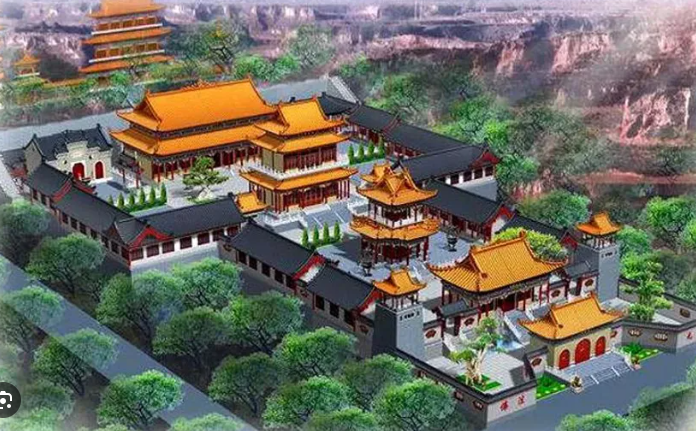
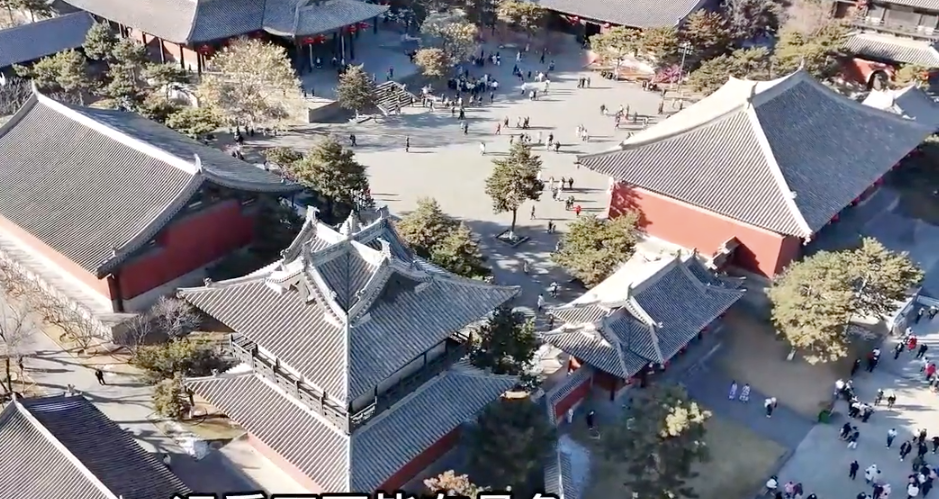
Below are examples of how the Chinese temples look like: (Chinese temples didn’t have any dragon decoration except palaces for emperors. Nowadays, Satan added all kind of dragon decoration in buildings everywhere. )
—